
Industry News
Next-Generation Packaging Planning: Why Packaging Optimization Alone Is No Longer Enough
Thomas Goldhofer
·
Co-Founder
·
·
8 min

Optimized packaging is important, but it is only one part of an economical and sustainable logistics decision. Next-generation Packaging Planning combines CAD-based packaging simulation with 8 automated compliance checks, material planning, costs, transportation, emissions, documentation, and digital approval. This transforms an isolated calculation into an end-to-end workflow - from product development to the approved packaging concept.
Packaging optimization begins with a key question: How can a component be packaged safely, efficiently, and as standardized as possible? For industrial companies, this question is directly relevant. Container size, load capacity, packing density, unloading, loading, and handling all affect material usage, process capability, and costs.
However, packaging does not end at the edge of the container. Every packaging decision has further consequences. Packaging materials must be procured and costed. Dividers, interlayers, cartons, containers, and pallets form a packaging hierarchy. Gross weight and volume influence transportation. The chosen route and mode of transport affect freight costs and transportation emissions. The results must be documented, reviewed, commented on, and approved. Added to this are requirements for traceability and PPWR documentation.
This is precisely where pure packaging optimization differs from modern packaging planning. Packaging optimization improves the specific packaging solution. Packaging planning links this solution to the related business processes in logistics and consolidates all relevant results into a seamless decision-making process.
Pakera refers to this approach as Next-Generation Packaging Planning. This refers to a digital end-to-end solution for industrial packaging decisions, ranging from CAD-based simulation through compliance, material bills of materials, packaging costs, transportation costs, and transportation emissions to modular reports and approved packaging concepts.
Packaging optimization remains essential, but it is only the first step
Packaging optimization focuses on the technical and operational suitability of a package for a component. Among other things, it answers the following questions:
What container size is suitable?
What load capacity is required?
How many components fit in the container?
What orientation and packing method make sense?
How can loading and unloading be designed to be practical?
Is the packaging suitable for manual or automated handling?
Which standard containers can be used?
What are the volume and weight utilization rates?
How much empty space remains in the packaging system?
This analysis serves as an indispensable foundation. Packaging that does not fit geometrically, exceeds the permissible weight, or is unmanageable in the operational process does not need to be examined in terms of other aspects.
In the international market, aspects of this field are often described using terms such as packaging optimization, packaging simulation, cartonization, 3D bin packing, pallet optimization, or container loading optimization. These terms typically address only the isolated geometric and computational optimization of packing patterns, containers, cartons, pallets, and loading units.
For industrial supply chains, however, this focus alone is not sufficient. The technically optimal packing arrangement is not automatically the most economical, sustainable, or logistically feasible overall solution. Only by integrating material requirements, costs, transportation, emissions, documentation, and approval can a good packing pattern be transformed into a sound packaging decision.
Packaging Optimization and Packaging Planning: The Crucial Difference
The two terms are often used interchangeably, even though they describe different scopes.
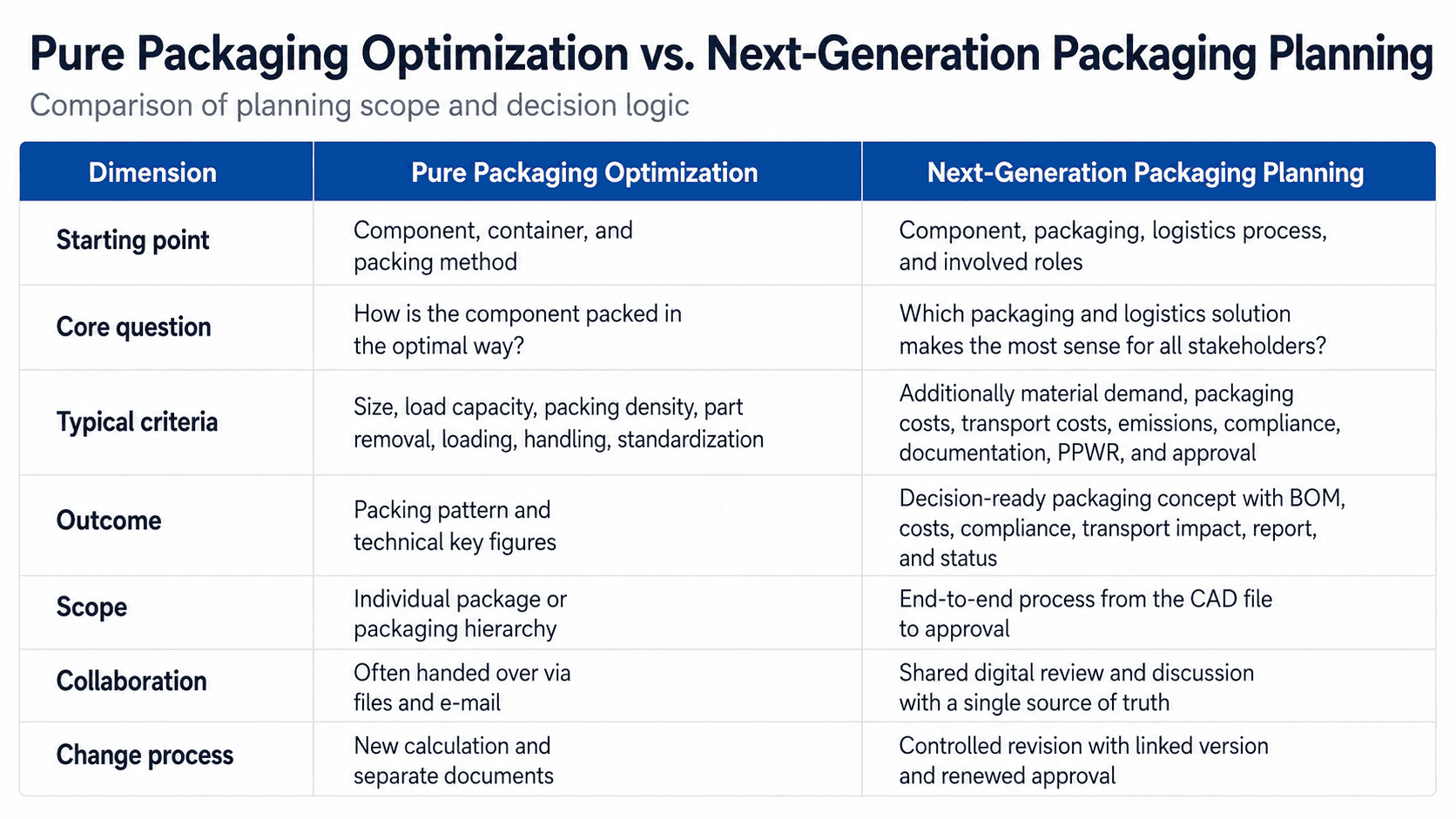
Table 1: Comparison of traditional packaging optimization and next-generation end-to-end packaging planning.
Packaging optimization is therefore not a counter-model to packaging planning. It is its technical core. Next-generation Packaging Planning expands this core to include the economic, environmental, documentation, and organizational steps that follow in industrial practice anyway.
Why the Local Packaging Optimum Is Not Automatically the Logistical Optimum
A high packing density can reduce the number of containers. At the same time, it may require additional separators, which can make removal more difficult or increase the gross weight. A standardized container simplifies procurement, storage, and master data. However, if component geometry is unfavorable, it can result in more empty space. A particularly lightweight single-use package eliminates return transport but creates new material requirements with every delivery. A reusable container can strengthen material cycles but requires circulation, return, cleaning, and inventory control.
These interdependencies illustrate why packaging decisions must be viewed as a multi-objective problem. An improvement in one area can shift costs, risks, or environmental impacts to another. The best option is therefore not necessarily the solution with the highest volume utilization or the lowest purchase price. What matters most is which solution offers the most compelling overall picture across the product, packaging, transportation, and process.
Research on the relationship between packaging design, fill rate, and road freight transport shows that measures to improve space utilization can have economic, environmental, and logistical effects simultaneously. This is precisely why packaging should not be evaluated in isolation from vehicle utilization and the other stages of the logistics process.
Next-generation Packaging Planning makes these interdependencies visible. The platform’s logic does not end with the result of the packaging simulation. It uses this result as a starting point for the next decisions and involves all stakeholders in the process to ultimately achieve an optimal supply chain.
Why Packaging Planning Should Begin in Parallel with Product Development
The greatest design flexibility exists not just before the start of series production, but during product development. At this stage, CAD data is often already available, while the component, packaging, delivery concept, and process can still be adjusted.
Early digital packaging planning or pre-validation makes it possible to identify potential problems before a sufficient number of physical prototype parts are available to conduct packing trials under production conditions. These include unsuitable component orientations, insufficient grip space, excessively heavy containers, unnecessary empty space, difficult removal, non-standardized containers, or a packaging hierarchy with unfavorable transport implications.
This does not mean that physical packing trials are no longer necessary. For sensitive components, applications with high damage costs, or safety-critical applications, real-world testing remains essential. However, digital packaging simulation can reduce the range of possible variants in advance. Instead of manually testing numerous ideas, the most plausible concepts are first selected and validated in a targeted manner.
The key advancement lies in parallel processing. Packaging development, cost assessment, logistics planning, sustainability assessment, and documentation do not have to begin sequentially. They can be prepared and continuously updated based on the same data set even during product development. This makes changes visible earlier and allows them to be addressed at a stage when they are still relatively easy to manage.
From CAD File to Approval: The Pakera Workflow in Ten Steps
Pakera connects the individual work steps in a seamless, browser-based workflow:
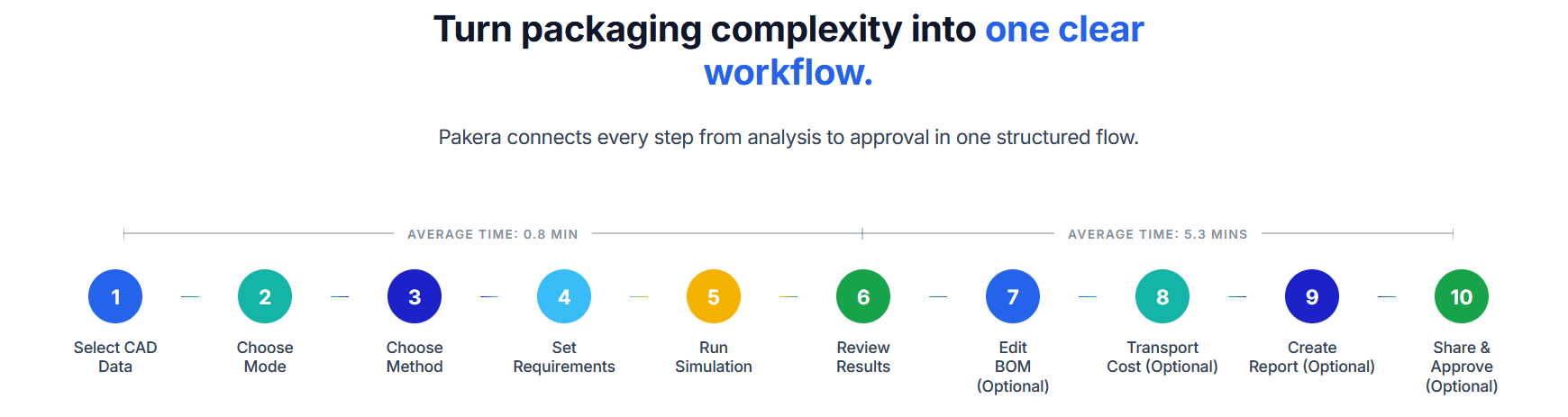
Figure 1: Pakera's workflow for next-generation packaging planning
Select CAD data
Select packing mode
Select packing method
Define requirements
Run simulation
Review results
Edit or complete the bill of materials
Calculate shipping costs and shipping emissions
Generate packaging report
Share, review, and approve results
Pakera’s workflow diagram shows an average time of 0.8 minutes for the first phase up to the simulation. An average of 5.3 minutes is reported for the subsequent review of results and the optional follow-up steps. These figures are based on internal tests and pilot projects and demonstrate the enormous potential of an integrated process. The actual processing time depends on the selected packing mode, the selected packing method, the selected parameters, and the information required in the subsequent workflow.
The key point is not just the speed of the individual calculations. What is crucial is that data does not have to be re-collected, transferred, and manually incorporated into new documents for each subsequent step. Information already available from the simulation can be reused for the BOM, costs, transportation, reports, and approval.
1. Packaging Simulation: Creating a Robust Packaging Concept from CAD Data
The workflow begins with the component’s CAD data. Based on this, the appropriate packing mode is selected. Pakera distinguishes between different use cases:
Smart Fill determines how many components fit into a defined container.
Smart Select assists in selecting a suitable container and packaging concept for a given quantity of parts.
Smart Stack examines the arrangement of cartons or containers within a higher-level loading unit.
Next, the packing method and requirements are defined. These include, for example, permissible orientations, spacing, protective materials, interlayers, maximum weights, and other operational conditions.
The simulation does not merely assess whether a component fits geometrically into a container. It evaluates the packaging in terms of size, load capacity, retrieval, loading, handling, and container standardization. Relevant metrics include, among others, the number of parts, volume utilization, weight utilization, empty space, net and gross weight, volumetric weight, and the number of loading units required.
This provides a technical basis for decision-making that goes beyond mere 3D visualization. The result does not merely show a packing layout; it also reveals whether the solution can be practically implemented in logistics.
2. Automatic Bill of Materials: From Packing Layout to Packaging Material Planning
Once the packaging concept is finalized, the required bill of materials can be automatically derived from it. The BOM translates the simulation result into a concrete list of materials.
Depending on the packaging hierarchy, it may include the following items, for example:
Primary container or folding carton
Outer carton
Divider sheets
Compartments or inserts
Cut and edge protection
Labels
Pallets
Containers or additional transport levels
If containers, packaging materials, suppliers, weights, and prices are maintained in the master data, the BOM can be generated largely automatically from the packaging concept - including material cost calculations. Manual additions remain possible where project-specific information is missing or needs to be intentionally adjusted.
The benefits go far beyond a simple list of materials. The BOM can provide transparency regarding quantities, unit prices, total costs, and packaging costs per component. This transforms the technical packaging decision directly into a commercially evaluable solution.
This is exactly where true packaging planning begins. Purchasing and cost managers do not have to create a separate cost calculation only after the simulation is complete. Existing data is reused. This reduces data silos and creates a common foundation for packaging planning, purchasing, and logistics.
Structured information on packaging types, packaging levels, materials, dimensions, reusability, recycling characteristics, and void space is also relevant for PPWR documentation. A BOM alone does not replace technical documentation. However, it provides an important part of the data foundation needed for evaluation, verification, and subsequent updates.
3. Reducing Transportation Costs: Extending Packaging Simulation to Include the Route
A packaging solution is not fully evaluated from an economic standpoint until its impact on transportation is taken into account. The number of parts per container determines how many boxes, pallets, or containers are required. External dimensions and gross weights influence volumetric weight, chargeable weight, and load factor. The packaging hierarchy thus directly affects the number of shipments and the cost per component.
In the next step of the Pakera workflow, the route and mode of transport are planned. Depending on the use case, multiple transport segments and modes of transport can be considered. The calculation combines packaging data with distance, mode of transport, and billing basis.
This reveals the following key metrics, among others:
Total distance
Cost per transport segment
Estimated total transport costs
Transport costs per component
Gross weight and volumetric weight
Chargeable weight
Number of packages and loading units
Emissions generated (CO₂e)
For companies seeking to reduce transport costs or lower logistics expenses, this connection is crucial. An optimization that considers only the price of the carton may overlook the significantly greater impact of freight costs. Conversely, a higher-quality packaging concept can make economic sense if it reduces the number of containers, pallets, or shipments.
4. Calculating Transportation Emissions: Sustainability Becomes a Planning Factor
Transportation costs and transportation emissions stem from the same physical reality. The number and weight of loading units, load factor, route, distance, and mode of transport determine not only the economic but also the environmental impact of a packaging concept.
Pakera therefore integrates the results of the packaging simulation with transportation planning and has entered into a partnership with EcoTransIT World. The company specializes in calculating transportation emissions and is a global leader in this field.
The Pakera packaging report can detail transportation activity, greenhouse gas emissions, and emission intensity. ISO 14083 provides a common methodology for quantifying and reporting greenhouse gas emissions from passenger and freight transport chains.
The advantage of combining packaging simulation with transportation planning lies in the ability to compare different variants. If a container is modified, the number of parts per loading unit may change. As a result, the number of shipments, the weight transported, and emissions per component may vary. These effects are not only visible in a downstream sustainability report but are already apparent during the packaging planning phase, which can take place concurrently with product development.
This is particularly relevant for sustainable packaging. Using less material is not automatically the most sustainable solution. A variant that uses slightly more material may be more cost-effective overall if it reduces product damage, enables more cycles, or improves transport utilization. Conversely, high packing density is only sustainable if protective function, handling, and processability are maintained.
Next-generation Packaging Planning therefore does not treat sustainability as an isolated metric. Material, reusability, void space, transportation requirements, and emissions are considered together.
5. Modular Report Builder: Turning Data into a Verifiable Packaging Concept
Calculations alone are not sufficient in an industrial decision-making process. The results must be presented in a way that allows different stakeholders to understand, review, and evaluate them within their respective areas of responsibility.
Pakera’s modular Report Builder allows you to select the content needed for each specific use case. Not every recipient requires the same level of detail. Packaging planning requires different information than purchasing, quality assurance, management, or an external customer.
A packaging report can include the following modules, among others:
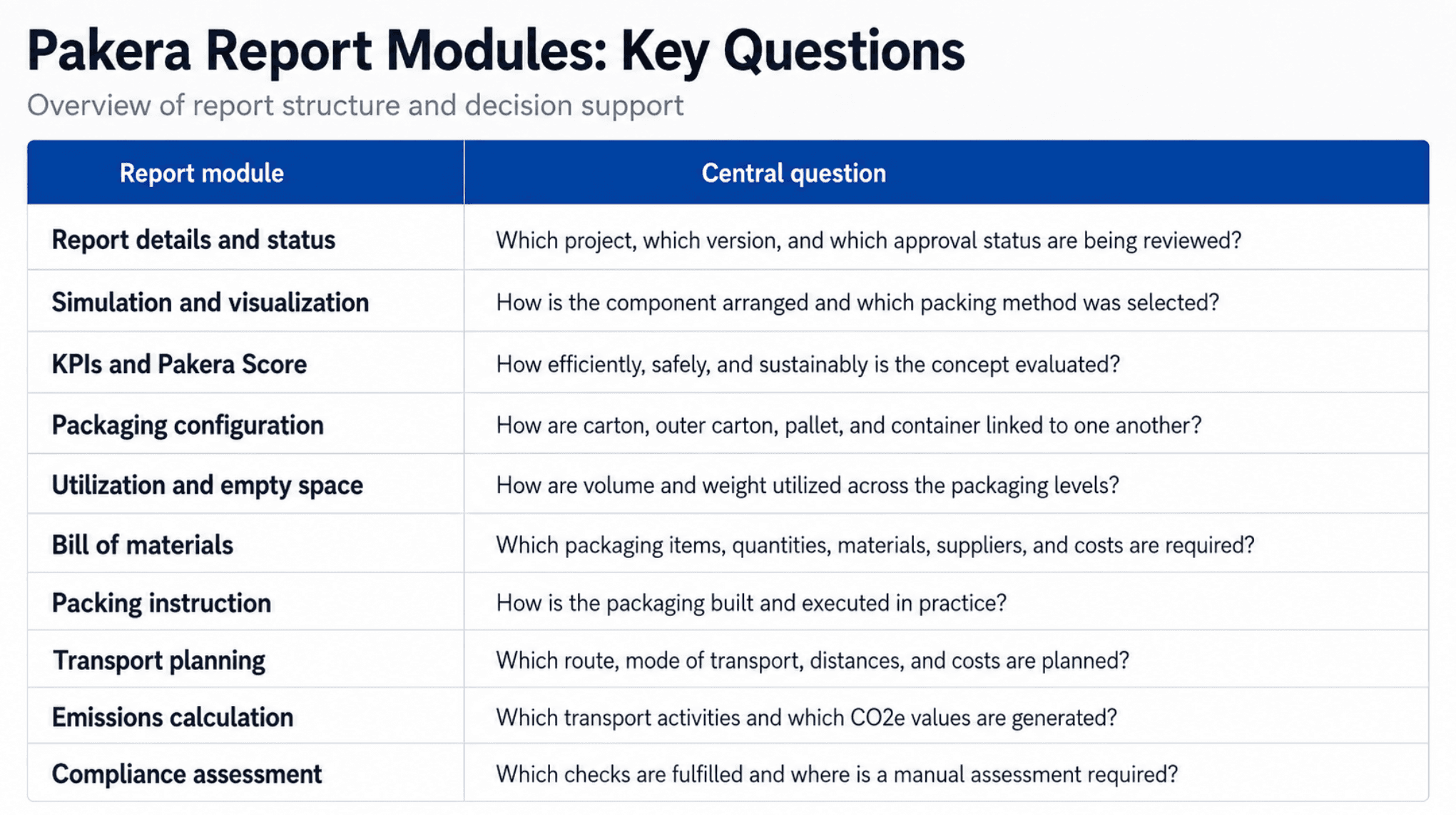
Table 2: Overview of Pakera report modules and the key decision questions they address.
The Pakera Packaging Report maps out this logic through a series of interrelated results. Simulation results, packaging hierarchy, bill of materials, packaging costs, packing instructions, transportation costs, route, emissions, and compliance assessment are presented in a single, coherent document.
The report is thus more than just a presentation. It serves as the basis for decision-making for the next stage of the workflow. Stakeholders see not only the packing layout but also the economic, logistical, and sustainability-related implications.
6. Digital Approval Process: A Single Source of Truth Instead of Version Chaos
Once the packaging concept and report have been created, the coordination process begins. In traditional processes, PDFs, spreadsheets, CAD screenshots, and comments are often distributed via email. This quickly leads to multiple versions, unclear responsibilities, and questions about which document was actually reviewed.
Pakera consolidates the coordination into a digital approval process. The packaging concept ready for approval is shared with the relevant parties via a secure, time-limited web link. Internal and external stakeholders can view, review, and comment on the latest results in real time. Invited participants do not need a Pakera account, and there are no costs involved.
The key advantage is the shared database. Packaging planning, logistics, purchasing, quality, production, sustainability, customers, and suppliers all view the same version. Comments and decisions remain linked to the respective packaging concept.
Once the requirements are met, the version can be approved. If there are still outstanding issues, the concept is not informally modified in a separate file. Instead, it is systematically returned for revision. The packaging is adjusted, simulated again, and then made available for review once more.
This closed loop of simulation, review, revision, and approval creates a single source of truth. It reduces the risk that outdated files will continue to be used or that an approval cannot be clearly assigned to the reviewed version.
Pakera’s 8 Smart Checks
For every packaging simulation, Pakera automatically performs eight integrated Smart Checks. These checks assess the chargeable weight, the permissible container load, safety and ergonomics during manual handling, transport and storage safety, the plausibility of the simulation results, logistical efficiency, and selected sustainability criteria. The results highlight critical issues early on and provide standardized guidance for evaluating and comparing packaging concepts. In this way, the Smart Checks support logistics, packaging planning, quality assurance, and other relevant departments in making more informed decisions, without replacing the final technical review or a formal conformity assessment.
The Pakera Score®: Evaluate and Compare Packaging Concepts at a Glance
The Pakera Score condenses the most important results of packaging optimization into a uniform and easily understandable overall assessment using a scoring system ranging from 0 to 100 points. To do this, it takes into account over 10 selected criteria from the packaging simulation and the Smart Checks, and considers, at a high level, logistical efficiency, safety and compliance-related conditions, as well as relevant sustainability aspects such as resource usage, void space, and reusability. This enables companies to compare different packaging variants more quickly, identify strengths and areas for improvement, and provide transparent justifications for decisions across departments. The Pakera Score serves as a guide and prioritization tool within the planning process and does not replace technical reviews, formal approvals, or proof of legal compliance. The exact weighting, the thresholds used, and the underlying calculation logic remain intentionally part of Pakera’s proprietary methodology.
Why Browser-Based Packaging Planning Is the Modern Approach
For a long time, specialized packaging software was associated with very expensive on-premises installations, technical setup, and extensive training. This model can work for individual expert workstations with technical CAD and simulation expertise. However, it creates additional hurdles for a cross-departmental and cross-organizational workflow.
A browser-based, intuitive packaging planning solution that anyone can use reduces the effort required for local installation and lowers the barriers to entry. Users can get started using a modern browser without having to deploy separate software on every workstation. Features, workflows, and documents are centrally available, regardless of location, hardware, or device. Internal and external stakeholders can be more easily involved in review and approval processes.
Pakera complements this approach with free video tutorials and guided user navigation. This makes standard applications usable without lengthy and expensive training programs. This is particularly relevant when not only a few simulation experts but also logistics, procurement, quality, production, and other roles are expected to work with the results. Individual employee training sessions are still offered upon request.
Data security is a top priority for Pakera, so the security architecture was a key focus from the very beginning. This includes appropriate access controls, roles, time-limited access permissions, modern encryption - including customer-managed keys - logging, and clear lines of responsibility. The advantage of a centralized platform is that these rules can be uniformly applied across the entire workflow, rather than distributing sensitive project statuses via local files and uncontrolled attachments.
The future of digital packaging planning therefore does not lie solely in the browser. It lies in the combination of easy accessibility, a centralized database, controlled collaboration, and industry-grade security.
PPWR Software: Documentation During Packaging Planning Instead of Afterward
The EU Packaging Regulation (PPWR) generally takes effect on August 12, 2026. It makes packaging a more heavily documented compliance issue for manufacturers and importers. According to Article 10, starting in 2030, packaging must be designed so that its weight and volume are reduced to the minimum necessary for its function. For technical documentation, the regulation explicitly lists tests, studies, modeling, and simulations as possible forms of evidence.
Manufacturers must conduct a conformity assessment for the relevant requirements, prepare the technical documentation, and issue an EU Declaration of Conformity in accordance with the structure specified in the PPWR. Responsibility for this remains with the manufacturer. Software cannot assume this responsibility or guarantee conformity based solely on a calculation.
This is precisely why the integrated workflow is so important. PPWR documentation should not have to be reconstructed from scattered files only at the end of the process. Relevant information can be recorded in a structured manner in Pakera as early as the packaging development phase:
Identification of the packaging and the project
Description of the component and its intended use
Packaging classification
Packaging stages and packaging materials
Dimensions, weight, and volume utilization
Material information
Reusability and recycling characteristics
Void space and fill rate
Technical specifications used
Results from modeling and simulations
Factors limiting further weight or volume reduction
Version, review status, and approval
Pakera can consolidate this data from simulations, BOMs, transport planning, and reports into a consistent process and make it available for PPWR documentation as well as for preparing a declaration of conformity. The practical benefit is that documentation does not have to be organized as a separate follow-up task. It is generated almost entirely automatically based on the data that is required for the packaging decision anyway.
The European Commission’s current guidance on the PPWR is intended to support companies in the uniform application of the new rules. However, it does not change the fundamental division of roles. Software structures data and supporting documentation. The technical assessment and legal responsibility remain with the relevant economic operator.
Why End-to-End Packaging Planning Is a Step Forward from a Sustainability Perspective
Sustainability is often reduced to material selection or recyclability. For industrial packaging systems, this view is too narrow. A robust assessment must also take into account protective effectiveness, reusability, capacity utilization, transportation requirements, return logistics, risk of damage, and process complexity.
An end-to-end workflow improves the quality of this assessment for three reasons.
First, impacts become visible earlier. If a packaging variant is simulated as early as the product development phase, empty space, material requirements, and transportation impacts can be assessed before a standard becomes entrenched in the mass production process.
Second, conflicting objectives become transparent. Lighter packaging can cause more damage. A reusable container may make ecological sense, but it requires a realistic number of cycles and a functioning return logistics system. A very dense packing proposal can reduce transportation emissions but slow down unloading or fall short of required safety clearances.
Third, it creates traceability. Sustainability decisions can be better justified when assumptions, variants, material requirements, transportation data, and approvals are documented together. This is more convincing than a single metric with no discernible connection to the packaging and logistics concept.
That is why Pakera does not associate “Sustainable Packaging” with a blanket promise. The platform creates the database on which companies can jointly evaluate the economic and environmental impacts of various packaging options.
Why a workflow lasting just a few minutes represents a real leap in productivity
In traditional packaging planning, a large portion of the effort arises not from the actual technical decision, but from data transfer and coordination. Dimensions are imported from various files. Container data is searched for. Costs are calculated separately. Transportation values are determined in a separate spreadsheet. Reports are created manually. Feedback is received through multiple email threads.
An integrated workflow not only significantly shortens processing time; it also reduces the number of handoffs between different interfaces, departments, companies, and individuals.
With well-maintained CAD, container, material, and cost data, Pakera can prepare a verifiable workflow from the packaging concept to the report in just a few minutes. The average times shown in the workflow - 0.8 minutes for selection and simulation, and 5.3 minutes for result verification and optional follow-up steps - illustrate this speed.
This statement must be put into proper context. System processing may take just a few minutes. The technical review of complex applications and organizational approval by multiple stakeholders require additional time, depending on risk and availability. Pakera accelerates the process by providing the basis for decision-making more quickly and consistently. It does not replace the necessary due diligence.
This is precisely where its strength lies. Speed is not achieved by omitting important steps, but by linking them together.
How Next-Generation Packaging Planning Benefits Business Units
The end-to-end logic is particularly valuable because the same data can be utilized by different roles.
Table 3: Business benefits of next-generation packaging planning across key organizational functions.
The result is not an additional data system separate from day-to-day operations. Ideally, the documentation emerges directly from the actual packaging workflow. This is precisely what increases the likelihood that data will remain up-to-date and that decisions can be traced later.
For Which Industrial Companies This Approach Is Particularly Relevant
Next-generation packaging planning delivers the greatest benefits where packaging decisions occur repeatedly and influence multiple process stages. The approach is particularly relevant for companies with:
recurring components and mass production
available CAD data
high packaging or transport volumes
multiple plants, suppliers, or customers
a large number of container and packaging material variants
a high need for coordination between departments
requirements for standardization and versioning
increasing documentation and PPWR requirements
clear goals for reducing packaging, transportation, and logistics costs
For one-time, simple shipping cases, a comprehensive workflow may be overkill. In the case of recurring industrial material flows, however, small improvements multiply across unit volume, lead time, and locations. That is where packaging planning becomes a true economic lever.
What Next-Generation Packaging Planning Is Definitely Not
A compelling solution must also clearly define its limitations.
Next-generation Packaging Planning is not just 3D bin packing. Geometric optimization is important, but it does not encompass the entire decision-making process.
It is not merely a report generator for creating packing instructions. A good report is valuable when its content is derived from reliable data and a traceable workflow.
It is not a digital email attachment. Only a shared version, direct commenting, and controlled approval create a true single source of truth.
It is not automatic legal advice, nor is it an automatic guarantee of PPWR compliance. The platform can prepare documentation, reviews, and declarations. Technical evaluation and responsibility remain with the relevant individuals and companies.
Nor is it a substitute for physical validation when product safety, occupational safety, or the potential for significant damage require real-world testing.
This distinction does not weaken the value proposition; it makes it more robust. Pakera accelerates and structures packaging decisions without replacing technical responsibility with a software-generated result.
Conclusion: The future belongs to holistic digital packaging planning
Pure packaging optimization answers the question of how a component can be packaged better. Next-generation packaging planning answers the question of how this packaging can be transformed into a comprehensive solution that is economically, logistically, ecologically, and organizationally viable.
To achieve this, Pakera combines the key steps into a holistic workflow and evaluates the simulation results using the Pakera Score® to make them comparable with one another. CAD-based packaging simulation forms the technical core. The automatic Smart Checks assess the packaging concept’s viability from a compliance perspective and highlight remaining issues that need to be resolved. The automatically generated Bill of Materials provides transparency regarding material requirements and packaging costs. Transportation planning and emissions calculations show the impacts on route, freight, and sustainability. The modular Report Builder allows the relevant results to be consolidated into a customized yet standardized report. The digital approval process creates a single, shared version ready for approval.
Progress does not lie in a single feature. It lies in linking these features into a holistic, well-thought-out process. Data is not rebuilt after every step. Decisions remain traceable from the initial packaging concept through to final approval. Costs, sustainability, and PPWR documentation are not added as an afterthought but are considered from the very start, in parallel with product and packaging development.
This transforms packaging from a late-stage operational detail into an early, data-driven component of product and logistics planning. This is exactly what Pakera means by Next-Generation Packaging Planning.
For industrial companies, this approach means a faster path from the CAD file to a sound packaging decision. Fewer media breaks, less version chaos, earlier transparency regarding costs and emissions, and a better foundation for standardization, documentation, and approval.
Pakera provides this process with an end-to-end digital structure.
Learn here more about Pakera's Workflow
Packaging Report & Documentation
Digital Pallet & Container Optimization
Solutions for Efficient PPWR Documentation
Sources:
European Parliament and Council of the European Union. Regulation (EU) 2025/40 on Packaging and Packaging Waste. Specifically, Articles 10, 15, 24, 38, and 39, as well as Annexes VII and VIII.
European Commission. Guidance on Regulation (EU) 2025/40 on Packaging and Packaging Waste. Communication C/2026/3084 of June 10, 2026.
International Organization for Standardization. ISO 14083:2023. Greenhouse gases - Quantification and reporting of greenhouse gas emissions arising from transport chain operations.
Ahmad, Salman, Dhanan Sarwo Utomo, Pratyush Dadhich, and Philip Greening. “Packaging design, fill rate, and road freight decarbonization: A literature review and a future research agenda.” *Cleaner Logistics and Supply Chain*, Vol. 4, 2022, Article 100066.
GS1. Package and Product Measurement Standard. Current version.